Contrary to the advertising, the skies are not so “friendly” in this day and age of: crowded and overbooked flights, mechanic shortages, fierce competition and easily reviewed data regarding “on time” percentages. When someone is injured, either in the sky or at the airport, there are often special rules and “terms of art” regarding investigation, evidence, venue and damages available.
1. The “Sterile Area” of the airport
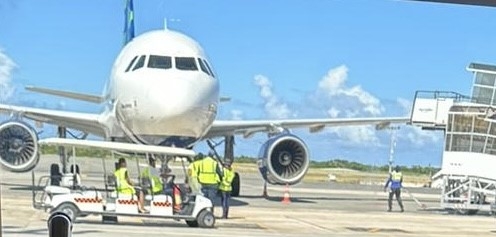
The dirty truth is that once a traveler passes through to the “sterile area,” the rules of the game change. The sterile area of the airport is that area beyond the TSA checkpoints. It is the part of the airport which provides access for boarding onto and off of aircraft (also referred to as the “Gate Area”). Access to the “sterile area” is highly restricted. Only ticketed passengers and individuals with an Airport Security ID Card may enter this area via the TSA Passenger Screening Checkpoint. If someone is injured while being dropped off at the airport or gets into a crash with another motorist in the airport parking lot, the usual tort laws apply. However, injuries that occur while boarding a jet, being transported via midfield terminal bus or underground train, or while deplaning may all be subject to the rules regarding the passenger’s status. This article will not be an exhaustive coverage of airport and airline injury cases, but will endeavor to touch up on some of the main points, so that practitioners can avoid “landmines” that may not be obvious to those who do not regularly practice in this area of the law.
Critically important to airport injury case success is securing the evidence immediately. As much of the “sterile area” is under surveillance since the 9/11 terrorist attacks, many accidents are captured on film. This is especially important in airport injury cases, as people do not pull over and wait for the police, as they would after a fender bender. In airport cases, the potential witnesses are rushing to catch their flight, connection, or luggage. Furthermore, because the airport authorities have so much recorded digital media, they do not keep it for long. One of the worst feelings is to have a potential client describe a compelling case, only to find out that you are too late to secure the surveillance footage, and there are no known witnesses because the other passengers did not stop to give their contact information.
-
Common carrier status
Airlines are “Common Carriers.” A Common Carrier means any land, sea, and/or air conveyance operating under a valid license for the transportation of passengers for hire. Maryland courts hold common carriers to “the highest degree of care” in operating their vehicles, requiring them “to provide safe means and methods of transportation.” Todd v. Mass Transit Admin., 373 Md. 149, 156 (2003). The plaintiff bears the burden of proving, under the circumstances, that a common carrier's actions were negligent. Washington Metro. Area Transit Auth. v. Seymour, 387 Md. 217, 225 (2005). This is the same as the legal duty required of a public bus, train, or other conveyance for hire. They have the duty to transport the passenger safely from “point A” to “point B.”
The airlines are typically not liable for consequences from an inevitable accident or occurrence that was completely unforeseeable, such as unexpected weather or natural disasters. Such things are often considered “Acts of God,” and the law generally does not hold Defendant airlines responsible for things that are outside of their control. There must be some proof that the airline was at fault in order for the injured passenger to prevail and receive reimbursement for losses.
-
The Montreal Convention for International Air Travel
However, if the itinerary included international travel, then the Montreal Convention may be applicable to help the injured traveler recoup his or her losses, though it does require filing in the Federal Court. This is an international treaty, set in place in 1999, that protects international air passengers. The Montreal Convention has a long, legal sounding official name (“The Unification of Certain Rules for International Carriage by Air”). This Convention establishes airline liability in the case of death or injury to passengers. Over 100 countries have agreed to its terms, which means that most international flights are covered. The airlines benefit from greater certainty about the rules governing their liability across their international route network. Since the laws vary from country to country regarding negligently inflicted injury and reimbursement, the treaty was formulated to give some predictability to the international airline industry. By having a standardized set of rules, the air carriers can predict and insure against their exposures for losses during international travel. Under the Montreal Convention, air carriers are strictly liable for proven damages up to 128,821.00 special drawing rights (SDR), a mix of currency values established by the International Monetary Fund (IMF) equal to roughly US $175,000.
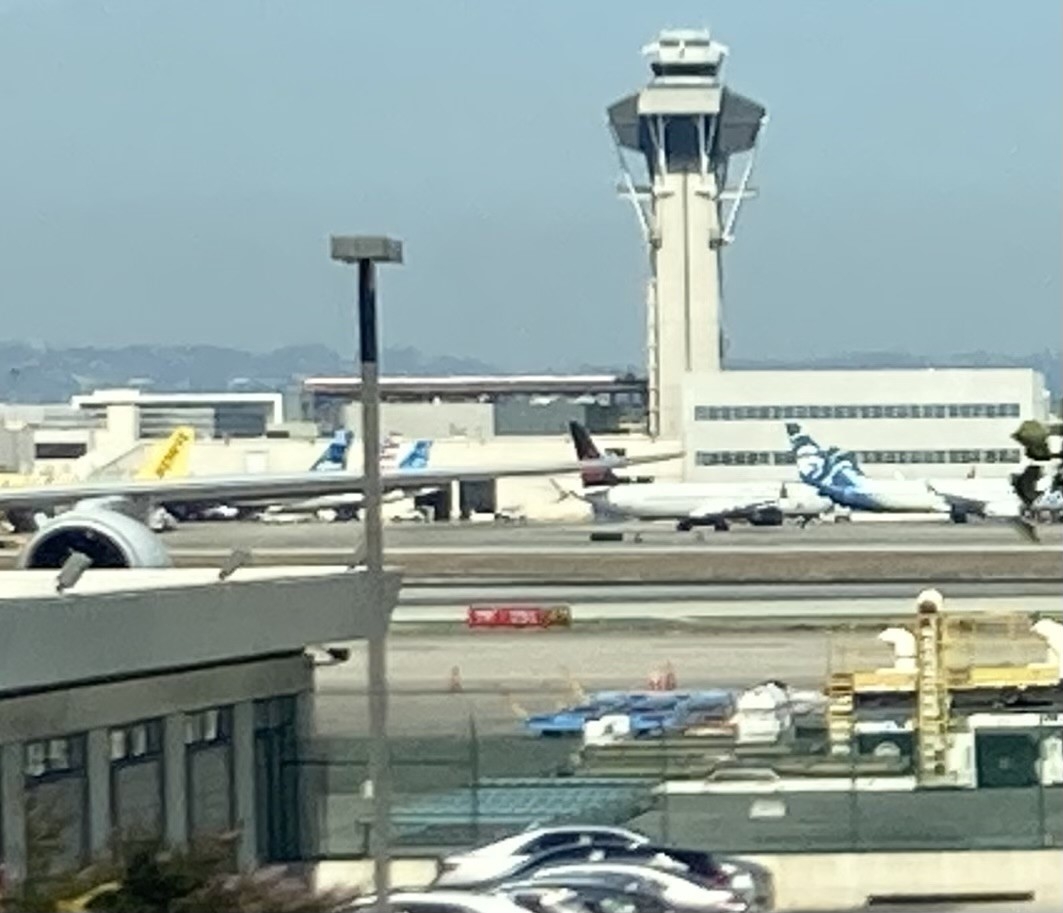
The Montreal Convention generally applies to the entire itinerary, even if there are multiple stops, between signatory countries. In other words, the treaty applies even if your client was injured going from Washington Reagan National Airport to Los Angeles Airport before heading on to Sydney, Australia. Our law firm gets calls from injured passengers who were hurt during the domestic leg of their trip but who nevertheless come under the protection of the Montreal Convention. For international flyers, the passenger only needs to prove that there was an accident between the time they got on or off the international flight. Once an accident is proven, then the airline faces liability up to the amount specified in the treaty. For those injuries that exceed the set amount, the airline can try to avoid liability by proving the accident was not caused by its negligence (or carelessness) or that the incident was caused solely by the passenger or a third party not under the airlines control.
In order to succeed in making a claim under the Montreal Convention, the passenger must prove:
A. that the injury or death resulted from an “accident,” AND
B. that the accident took place on board the aircraft.
OR
C. “in the course of any of the operations of embarking or disembarking.”
In the 1985 United States Supreme Court case of Air France vs. Saks, 470 U.S. 392 (1985) the high court defined “accident” under the Montreal Convention as “an unexpected or unusual event or happening that is external to the passenger.” Because this definition is less than crystal clear, the courts have broadly defined the Treaty’s coverage to include:
a. Aircraft hijackings;
b. passengers assaulting each other; and
c. failure by an airline to provide proper medical attention to an ill passenger on an international flight.
However, self-inflicted harm, intoxication and drug overdose may not satisfy the requirements of an “accident in the air.”
Cases that arise in the context of an injury in the air, as opposed to the more infamous jet crash litigation, are: (1) burns from scalding liquids during food and beverage service; (2) broken bones from runaway carts; (3) head trauma from falling overhead consoles; (4) hard landings and (5) sudden loss of cabin pressure. These cases also involve a “delay in care” because the injured air traveler has to wait, sometimes many hours, to get appropriate medical attention. The airlines are adroit at getting their personnel to fill out favorable reports, so getting the names and contact information from fellow travelers is important for the injured travelers and those traveling with them.
The Montreal Convention (Article 17) sets out when an airline is liable. A citizen of France, injured traveling between Miami International Airport and Washington Dulles International Airport on only a domestic ticket, would not be able to avail themselves of the benefits of the Montreal Convention. The injured passenger may be from another country and the airports were all “International,” but the itinerary itself was not. An airline trip that is entirely within the United States is not subject to the Montreal Convention.
Under the Montreal Convention, the injured passenger does not have to go back to the place where she was injured, where the airlines headquarters is located, or where she bought the ticket. Instead, she can file the case in her home country where she lives, as long as the airline operates passenger service in that country. The Montreal Convention offers protections for international travelers, though getting foreign medical treatment records, and then getting them translated, can be time-consuming. However, the Montreal Convention solves many problems with the practice and procedure of bringing claims for American air passengers who are injured on foreign aircraft or in faraway airports.
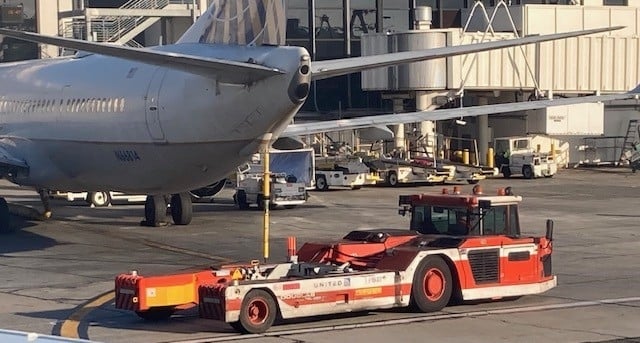
Injuries at airports can result from unsafe driving of vehicles not meant for the roads outside the Air Operations Area. These carts, tugs and other motorized vehicles are sometimes hard to see, hear, smell &/or perceive around the busy gates.
The international airline can avoid legal liability under this Treaty. The airline can be relieved from responsibility by proving that the injured passenger was negligent in causing her own injuries or that they intended to cause themselves harm. Psychic injury or purely psychological harms (i.e., emotional distress, fright, shock, PTSD, etc.) not tied to any physical injury (or discernible change in the anatomy) are generally not recoverable.
Where the injured international passenger’s damages exceed $175,000, the airlines have the burden to prove either:
1. the international passenger’s accident was not caused by the airline’s own negligence; or
2. the international passenger’s accident was caused solely by the negligence of a third party (i.e., another passenger, an employee of the airport in the terminal or contractor whose business was unrelated to the flight).
Unlike most personal injury and negligence cases, the burden of proof under the Montreal Convention generally falls on the international airline. In nearly every other kind of accidental injury case, it is usually the injured victim who must prove the case. This is often referred to in non-Convention cases as “the Plaintiff’s burden of proof.”
The Montreal Convention has a 2-year time limit within which to bring a claim. This is shorter than the personal injury time limit in states like Florida and the District of Columbia, but the same as Virginia. Because cases arising out of travel from DC National Airport and Washington Dulles International Airport are filed in the Federal Courts, and the U.S. District Court for the Eastern District of Virginia in Alexandria is known as the “Rocket Docket” because cases get to trial so quickly, DC-area international air injury cases often conclude more quickly than in other jurisdictions.
-
Securing evidence in an airport or airline injury case: go to the videotape!
After an injury at an airport or onboard an aircraft, tracking down witnesses quickly is important. Witnesses’ memories may fade, people may move, get married (and change their names) or they may take a job with a different company. The sooner the liability investigation begins, the sooner determinations as to fault can be solidified. The more you wait, or the longer the delays, the greater the likelihood that evidence will get lost, witnesses will become difficult to locate and the information needed to prove negligence will be gone.
Flight attendants may not be assigned to a specific airport. They may have a specific location where they are based, but they actually often do not live “in base.” Many in the aviation community “commute” (sometimes across the country!) to get to their base.
“Here today, gone tomorrow” aptly describes witnesses and especially flight crew members who might be witnesses to an airport or in-flight injury. It is important to secure eyewitness information as soon as possible. A former client was a pilot who lived in Virginia but flew out of Newark (“EWR”) International Airport in New Jersey, so he hopped a small jet to get to work almost every week. Another client who was in ticketing at Washington Dulles Airport (“IAD”), drove down to Virginia to work several days each week from her home in Northern New Jersey. We have had clients who regularly make use of “crash pads” with their crew mates with whom they like to work, fly and travel. Flight crews (flight attendants and pilots) are then often assigned a 2, 3, or 4-day string of trips across country in which they have various hotel stays in different locations each night. They are not just going back and forth from their base.
-
Air Operations Area
The Airport Operations Areas (or “AOA”) encompasses the runways, taxiing zones, aprons, refueling and loading areas at an airport. They are special, busy, loud, time-pressured environments, where injuries occur to innocent airport workers, government agents, airline employees and members of the traveling public. According to the Federal Aviation Administration (“FAA”) the Air Operations Area (AOA) “consists of airport areas where aircraft can operate, either under their own power or while in tow. The AOA includes runways, taxiways, and apron areas.”
https://www.faa.gov/documentLibrary/media/Advisory_Circular/150_5220_24.pdf
Another FAA definition of the “Air Operations Area” is “where security measures are enforced as specified in the airport security program. This area includes aircraft movement areas, aircraft parking areas, loading ramps, and safety areas and any adjacent areas (such as general aviation areas).”
https://www.faa.gov/documentLibrary/media/Advisory_Circular/150_5300_18b_part2.pdf To further elaborate, the term is defined in the Aviation Glossary explanation of the AOA as “Any area of an airport used or intended to be used for landing, takeoff, or surface maneuvering of aircraft. An air operations area includes such paved areas or unpaved areas that are used, or intended to be used, for the unobstructed movement of aircraft in addition to its associated runway, taxiways, or apron. https://aviationglossary.com/air-operations-area-aoa/
It is the area of the airport, after passengers pass through the entrance of the terminal, successfully navigate the TSA screening area and enter the “sterile area”, where their luggage from the underbellies of the jets is loaded and unloaded, planes are re-fueled, catering trucks mate to international aircraft, maintenance Cushman vehicles stop for repairs on jets or the airport electrical system, mid-field people movers bring travelers to their gates, tugs tow planes to runways or baggage to “arrivals” conveyer belts, ground crews use hand signals with illuminated wands to cockpits and pre-flight inspections are carried out by airline crew members. Understanding what area is within the special rules covering the AOA is critical to the investigation of a permanent injury case or collision between airport vehicles or jets.
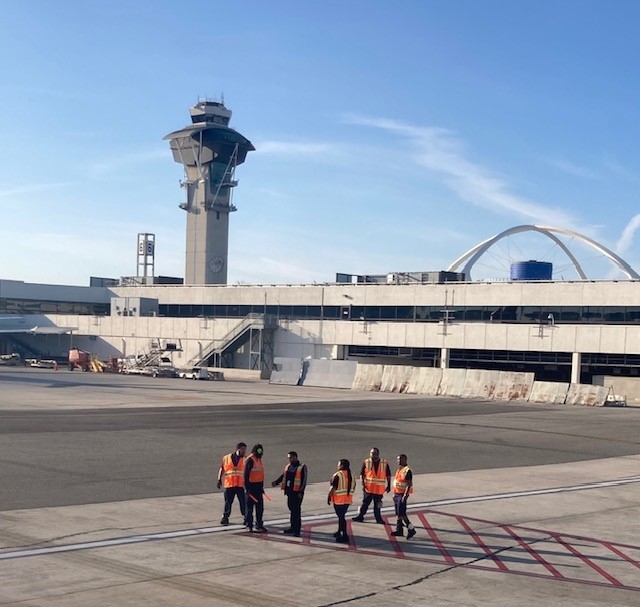
The AOA (“Air Operations Area”) is not a venue that your local, or even state police can usually investigate, if the airport has its own police force. Getting the surveillance footage and “incident reports” as well as “accident reports is critical in airport injury cases.
It is on the AOA that many airport workplace injuries occur. Employees on the AOA are often seen wearing hearing protection. When working at night, they cannot: see, hear, feel (vibrations from a nearby engine because the ground is shaking from jet engine blast), smell (because of the stench of spilled airplane fuel) or taste. In short, they are deprived of nearly all of their senses! Furthermore, many of the vehicles that dart around the runways and down into the baggage areas of the terminals are not designed like cars meant for the road. There are steel Cushman with no interior padding, so impacts result in permanent knee injuries. There are silent, electric vehicles that workers on foot cannot hear coming at them from behind. There are luggage carts with no airbags or side impact protection. And there are top-heavy, extension catering trucks, that will often barrel around the gates in violation of the AOA “pecking order.”
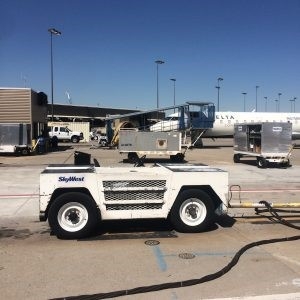
The areas around busy airport gates are subject to traffic by gas-powered and silent electrical vehicles, that often do not have occupant protection like air bags, side impact cushioning, or softer surfaces to absorb a blow from another vehicle on the AOA.
That’s right, there’s a “pecking order” for aircraft and ground vehicles. Large international jets have priority over regional planes, outbound people movers have precedence over inbound ones and aircraft have priority over motor vehicles. There are also speed limits and other “rules of the road” for the AOA. However, enforcement of the airport’s driving rules is enforced by the airport’s police department. In one case handled by our office, we found that over decades of so-called enforcement, Metropolitan Washington Airport Authority police had not ticketed a fellow M.W.A.A. co-worker. In that same case, discovery also revealed that the driver had been involved in several accidents before and after the accident in question, but he had received a promotion and a raise despite five incidents in approximately one year! The plaintiff sought punitive damages, and the court allowed the raising of the ad damnum but denied the motion to seek punitive damages against this quasi-governmental entity. Reese v. Metropolitan Washington Airport Authority, Loudoun County Cir. Ct., VA https://valawyersweekly.com/1997/03/24/negligence-single-vehicle-accident-airport-people-mover/
-
Discovery
Another lesson learned over the course of litigating airport injury cases is to not only request “Accident Reports,” but also to seek “Incident Reports,” as the airline or airport’s governing body may have their own nomenclature for the information you want. If your potential client’s injuries are a result of a vehicle crash, get not only the Defendant’s personnel file from the airport authority, airline or contractor, but also get their DMV record. Some airlines and other employers at the airport only check the employee’s driving record at the time of hiring. In another case handled by our office, the driver of an airline’s luggage tug had a “rap sheet’ that went all the way to the ground! However, because of union seniority, he could not be fired. When evidence of his terrible driving habits came to light, and the fact that the Defendant crossed over the center line in the bowels of the airport’s luggage carousel area and struck our airport employee’s Cushman at high speed, the case went to mediation and was quickly resolved.
Because workers on the AOA, just like flight crews, are subject to random drug screenings and must undergo annual physical exams, getting those records may yield valuable information in discovery. It is also helpful to get a consulting expert to help you decipher the maintenance records, shift reports, and airport’s “Lease & Use Agreement,” as often this will determine who actually is responsible for defending the litigation and paying any judgement. Airports like Washington Dulles International (“IAD”) and DC Reagan National (“DCA”) are able to exert their considerable economic leverage to have vendors, retail shops and others agree to hold MWAA harmless if an injury arises in the terminal. For example, in several of our travelers’ slip and fall on liquid cases, captured on the airport’s video surveillance, MWAA successfully handed over the defense to the retail vendor, maintenance company or construction contractor who was also a named Defendant under their “Lease & Use Agreement.” The Maryland Aviation Administration (MAA) is the owner and operator of Baltimore/Washington International Thurgood Marshall Airport (BWI) and Martin State Airport. Their rules may be different than those of MWAA, so having an expert to consult with pre-suit is invaluable.
Injuries onboard aircraft and at the airports present novel issues that can be quite different than those encountered outside their gates. When approached by a potential plaintiff in such a case, immediate investigation, with spoliation letters for airport surveillance footage; accident reports AND incident reports; maintenance history and personnel records, when applicable, can mean the difference between winning and losing. Getting the injured traveler’s itinerary, tickets and photographs of the scene, injury and witness contact information are also critical to the outcome in these claims.
Doug Landau has tried cases for travelers & workers injured on board & at the airports, throughout the East Coast, and has a website devoted to these lawsuits: https://landauinjurylaw.com/airportinjurylawyer/. A member of the bars of: VA, DC, NJ, CT & FL, he has taught & written for: AAJ, VTLA, MAJ & TLA-DC. ABRAMS LANDAU, Ltd. is located in its own handicap-accessible home near Washington Dulles International Airport (“IAD”), in Herndon, Virginia. Landau flies frequently for his cases, family, travel & races (as a member of TeamUSA - triathlon); his “Cases, Races, Faces & Places” mantra!






 My MAJ

.png)


.png)




.png)